Suspension Repair in Taneytown, MD
You usually notice suspension wear in your hands and your seat before you see it. The steering feels vague, the car wallows through a turn, or every seam in the road comes straight up through the floor. MTG Restoration diagnoses and repairs suspension problems at 11 Franklin Street in Taneytown, Maryland, for drivers who want their vehicle to ride and handle the way it should.

What the Suspension Actually Does
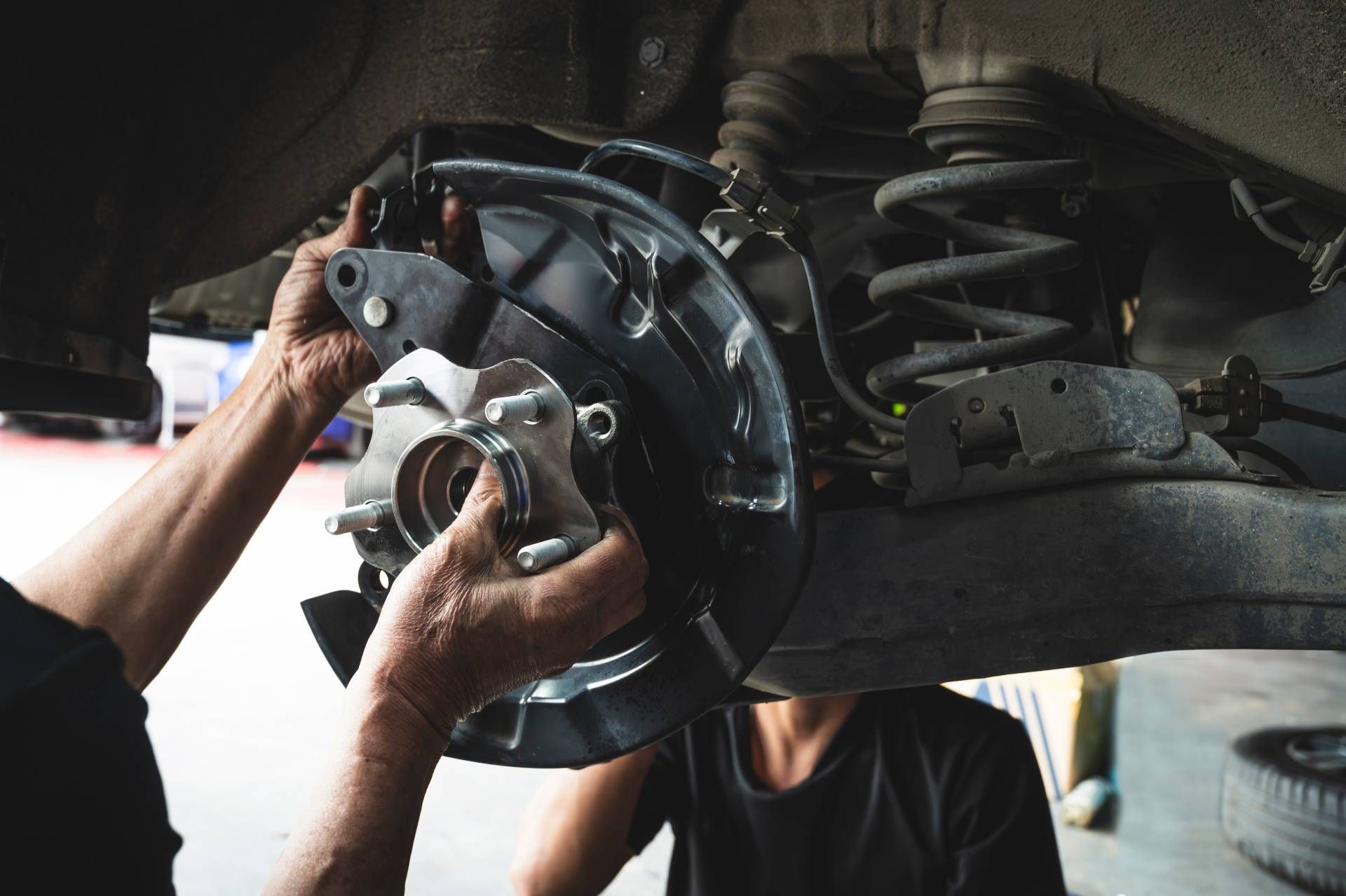
The suspension has two jobs that pull against each other. It has to soak up bumps so the ride stays comfortable, and it has to keep the tires pressed flat against the road so the vehicle can steer and stop. Springs hold the weight up. Shocks or struts control how fast the springs compress and rebound. Control arms, ball joints, tie rods, and bushings tie it all to the body and let the wheels move without wandering.
When any one of those pieces wears, the others pick up the slack, and they wear faster because of it.
How Worn Parts Show Up on the Road
Each failing component tends to leave its own fingerprint. Tired shocks or struts let the vehicle keep bouncing after a dip and make the nose dive hard under braking. A worn ball joint or tie rod end often clunks over bumps and can make the steering feel loose. Dried, cracked bushings let the suspension shift, which shows up as clunking when you accelerate or brake and as a car that wanders on the highway. A broken or sagging spring drops one corner lower than the rest. Tires tell the story too. A scalloped, patchy wear pattern around the tread, called cupping, is a classic sign of shocks that have stopped controlling the wheel.
Diagnosis Comes First
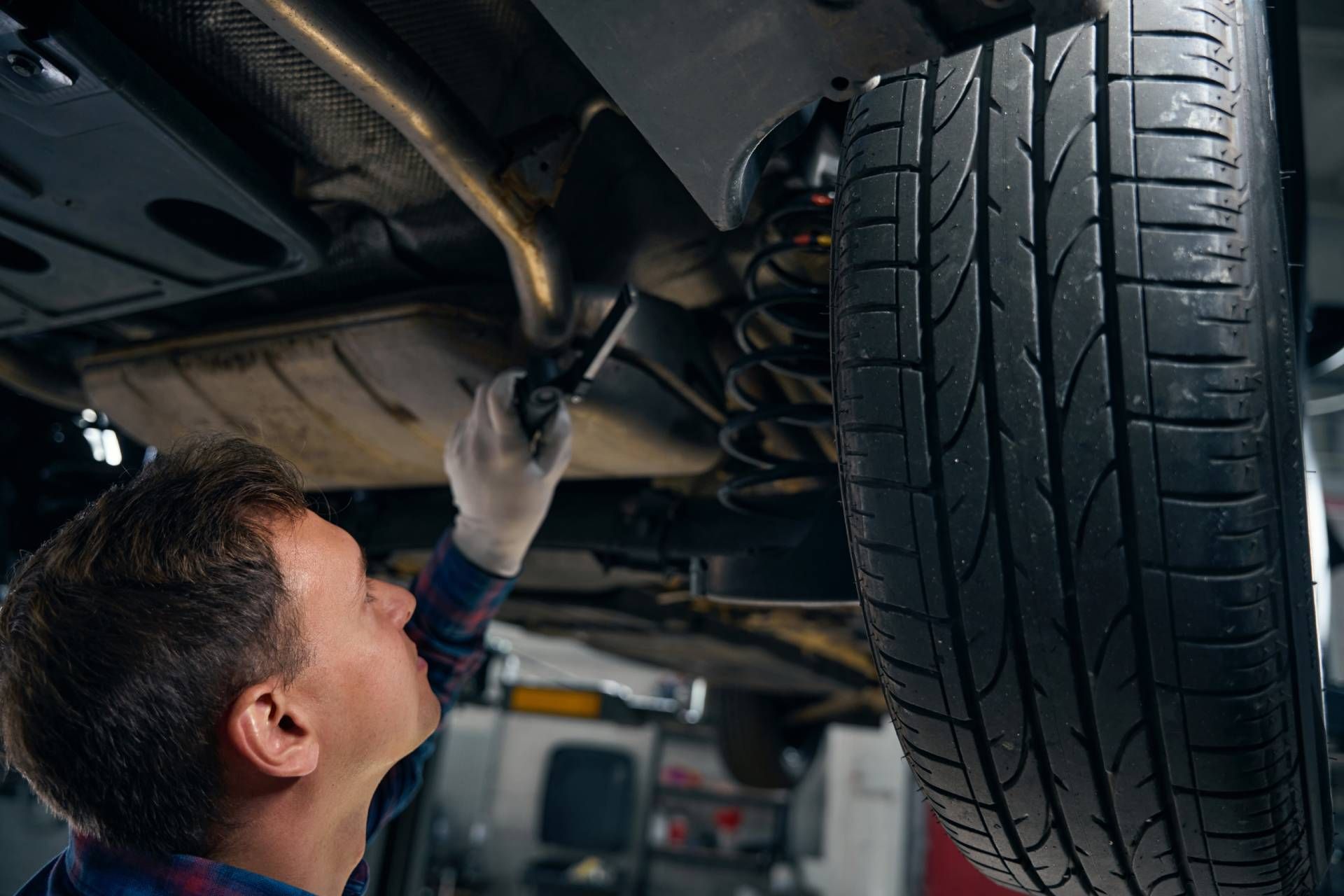
Several of those symptoms overlap, so replacing parts by guesswork wastes money. A clunk could be a ball joint, a sway bar link, or a loose mount. The repair starts by inspecting the suspension with the weight off the wheels and checking each joint and bushing for play, then confirming the source before anything gets ordered.
Suspension trouble and structural damage are often found together, particularly after an accident or years of rust. If a mounting point has moved, new parts alone will not fix the handling, and the job becomes
frame repair in Taneytown. Routine visits are a good time to catch wear early, which is one reason
regular auto maintenance matters.

After the Parts Are Replaced
Replacing steering and suspension components changes the angles the wheels sit at. That is why an alignment usually follows work on struts, control arms, or tie rods. Skipping it can leave a new set of parts riding on a vehicle that still pulls and still wears tires unevenly. The rest of what the shop handles is on the
MTG Restoration main page.
Suspension Repair FAQ
How can I tell if my shocks or struts are worn?
Push down hard on one corner of the parked vehicle and let go. A healthy shock lets it settle after about one rebound. If the corner keeps bouncing two or three times, the shock is no longer damping. Fluid leaking from the shock body is another clear sign.
What is the difference between a shock and a strut?
A shock absorber only controls spring movement. A strut does that job and also serves as a structural part of the suspension, holding the spring and supporting the steering knuckle. Because a strut affects wheel angles, replacing one is normally followed by an alignment.
Should shocks and struts be replaced in pairs?
Yes, generally both on the same axle at once. A new unit on one side and a worn one on the other damp differently, which can make the vehicle lean or pull under braking and in turns.
What causes a clunking noise over bumps?
Common sources are worn sway bar links, ball joints, control arm bushings, tie rod ends, and loose or worn strut mounts. The noise alone does not identify the part, which is why each joint is checked for play before a repair is planned.
Can bad suspension parts damage my tires?
Yes. Worn shocks cause cupping, a scalloped wear pattern around the tread. Worn ball joints, tie rods, or bushings can let the wheel move out of alignment, which wears the inner or outer edge of the tire faster than the center.